Ship
Sparrow Trainer
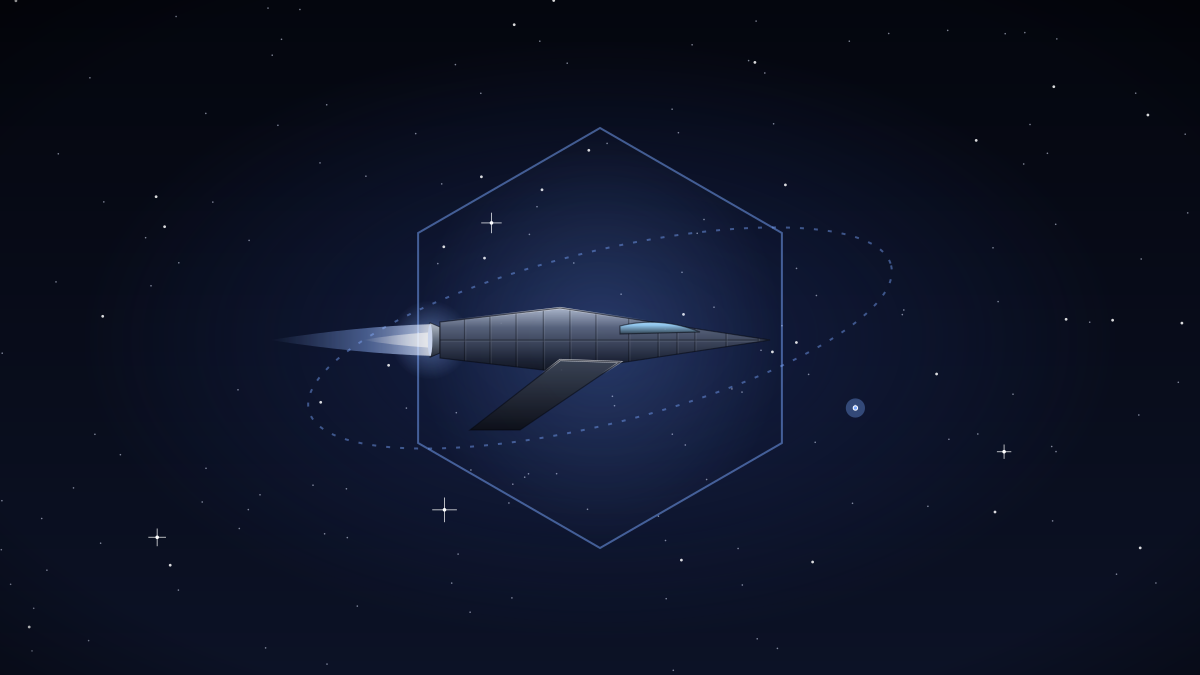
The Sparrow Trainer is where Halcyon pilots begin. Designed for flight schools and new operators, it is forgiving, inexpensive and simple to maintain. Development began in 2184 under Pilot Training Manager Ana Kalani, and the first production Sparrow flew on 30 June 2186 from our training centre in Oceania.
It is 11 metres long and seats one student pilot alongside an instructor, for a total crew of two. There is no cargo bay, since the Sparrow carries 0 tonnes of payload, but its cockpit mirrors the layout of the Wren and Kestrel, so skills transfer directly. The flight computer can simulate failures, from engine shutdown to sensor loss.
A methalox engine, burning liquid methane and liquid oxygen, gives a top speed of 95 km/s and a range of 3 AU, enough for training flights from Earth orbit to Luna and L5. Fuel consumption is 22.0 tonnes per 100 AU, though most training sorties use a small fraction of that.
At 4.1 million credits, the Sparrow is the cheapest craft Halcyon builds, cheaper even than the 6.4 Mc Wren Microlifter. Flight schools can buy a fleet for the cost of a single Seraph Medevac.
Most Sparrow graduates move on to the Wren or the right-hand seat of a Kestrel, and many go on to fly Atlas freighters or Starliners. Over 400 students have trained on the Sparrow since it entered production.
Safety features are generous for a craft of this size. The Sparrow has dual flight controls, so the instructor can take over at any moment, an automatic return-to-base mode, and a reinforced crew cabin designed to survive hard landings. Students begin with simulator time at the Oceania training centre before progressing to live flights around low Earth orbit, then to Luna and L5 Lagrange Station. The curriculum includes docking, emergency procedures and manual navigation without the autonomy system. Maintenance is deliberately easy: most components can be swapped by students as part of their training, keeping costs down and teaching them how spacecraft really work. Flight schools around Earth and on Luna are now taking delivery of the Sparrow, many retiring older trainers that were more expensive to operate and harder to maintain.