Ship
Gravitas Dock Barge
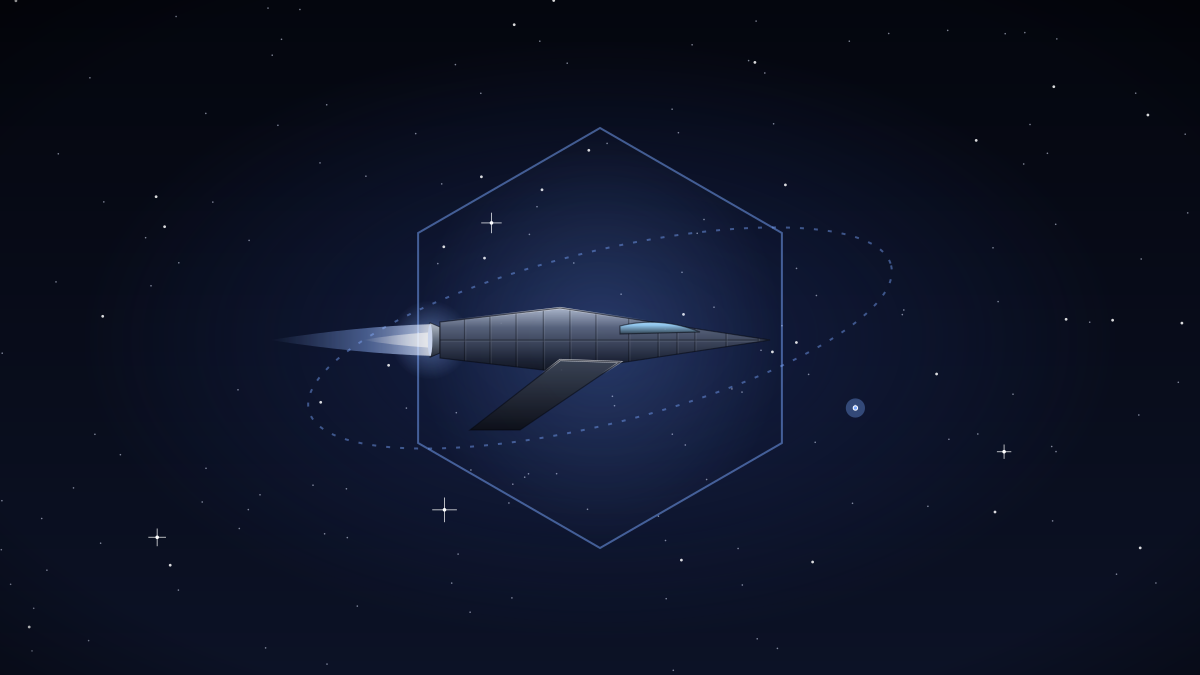
The Gravitas Dock Barge builds the infrastructure everything else depends on. Kepler Yards, the Olympus Ring and most stations around Luna were assembled with its help. The first Gravitas flew on 12 December 2179, and newer units remain in production today.
The barge is 340 metres long, flown by three pilots, and operated by a total crew of 26, most of whom are construction engineers and riggers. Six heavy manipulator arms and a gantry crane can position modules weighing up to 18,000 tonnes. Fabrication bays weld and print structural members on site.
Propulsion uses xenon ion thrusters, giving a top speed of only 45 km/s and a range of 6 AU, since the Gravitas usually stays near the structures it builds. It burns 8.0 tonnes of xenon propellant per 100 AU, but barges rarely move far.
Commissioning a Gravitas costs 330 million credits. Its smaller relatives, the 68 Mc Basilisk Salvage Tug and the 118 Mc Polaris Relay Tender, cannot handle the same loads. Every Meridian Colony Ark hull is assembled using Gravitas barges.
Yard Operations Director Arjun Mehta oversees a fleet of nine Gravitas barges at the Olympus Ring, and Principal Structural Engineer Haruto Nakamura designed their manipulator systems. Together they have assembled more than twenty docks, depots and habitat rings across L5, Luna and Mars orbit, and the newest production barges include upgraded arms with twice the dexterity of the 2179 originals.
The barge is designed to stay on site for years. Its crew of 26 live in a pressurised habitat with private cabins, a canteen and a medical bay, and rotate on six-month shifts. Construction work is planned by engineers on the ground and executed by the barge's crew with the help of autonomy software that coordinates the six arms so they never collide. A single Gravitas can assemble a complete docking ring in about four months, and a group of three can build a Meridian hull section in under a year. The barge's fabrication bays can turn raw Belt iron delivered by Leviathan haulers into finished structural beams on site. Operators include station builders at L5 Lagrange Station, the lunar authorities at Shackleton Base and the Olympus Ring yards above Mars, which use them to assemble everything from fuel depots to entire habitats.