Blog post
Designing the spin-gravity decks of the Halcyon Starliner
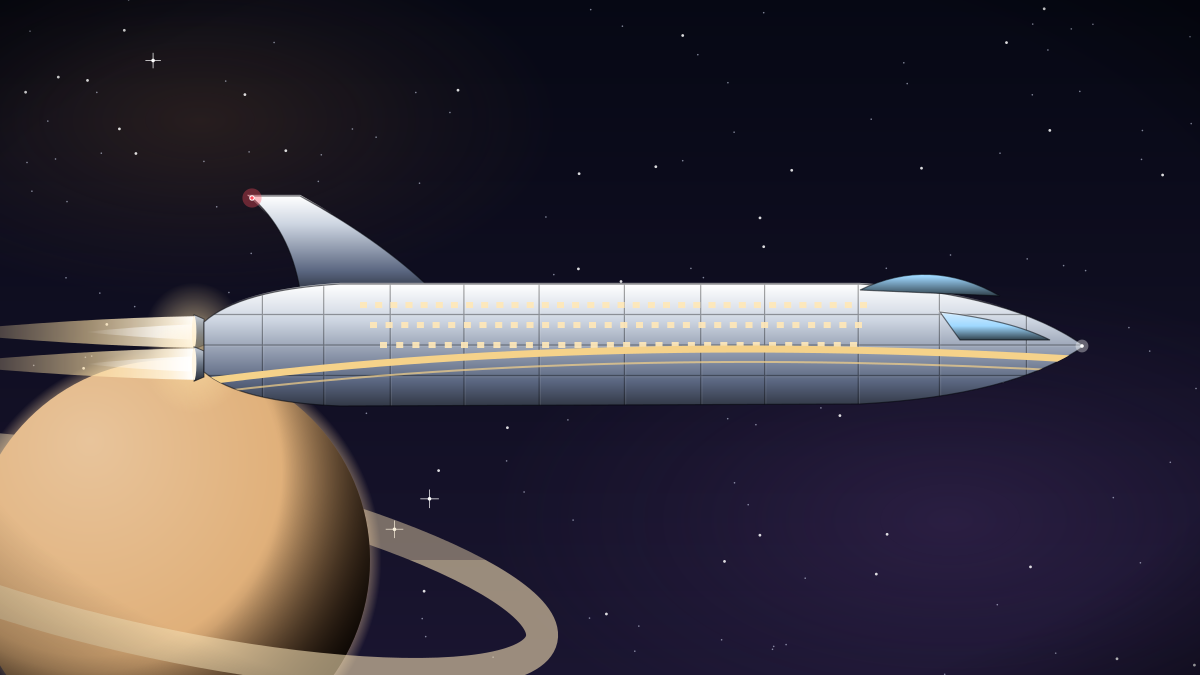
When we started sketching the Halcyon Starliner in 2181, the brief from leadership was one sentence: passengers should forget they are in space. For a 1,200-passenger liner that spends up to three weeks between Earth and Mars, that meant real gravity, or something close enough that a child could drop a cup and watch it fall.
The answer is two counter-rotating habitat rings, each 180 metres in diameter, mounted midway along the ship's 520-metre spine. They spin at just under 2.4 revolutions per minute, which gives 0.6 g at the outer deck and about 0.45 g on the upper promenade. We tested higher spin rates, but anything above three revolutions per minute made a noticeable fraction of test passengers queasy when they turned their heads quickly. Our human factors colleagues in Valparaíso ran more than 4,000 hours of rotating-room trials to find the comfort threshold.
Lower gravity changes everything about interior design. Stairs have shallower rises and longer treads, because people bound rather than step. Showers use directed water curtains rather than falling water. Restaurant tables have a slight lip so that Coriolis drift does not walk your glass toward the edge. We even angled the beds a few degrees into the spin so sleepers feel weight straight down through the mattress.
Some of the choices were about psychology rather than physics. Every cabin has a window, but the windows in the rings show a stabilised view projected from cameras on the non-rotating spine, because watching stars wheel past every 25 seconds is unsettling. Corridors curve upward ahead of you, so we use warm lighting and planted walls to soften the horizon. The central atrium, where the rings meet the spine, is deliberately zero-g: passengers love floating there for an hour and returning to weight afterwards.
The engineering cost was real. The ring bearings, despin seals and counter-rotation drive account for nearly 11 percent of the Starliner's 1,680 Mc commissioning price, and they need a 64-person crew to keep everything running, of whom four are pilots on the flight deck. But passenger surveys from our first two years of service are clear: 91 percent rated sleep quality as good or excellent, and motion-sickness reports are a third of what operators saw on older zero-g transports.
We are now taking those lessons into the habitat modules for the Meridian Colony Ark, where people will live under spin not for weeks but for years.