Blog post
Designing a cockpit for one: lessons from the Aurora Mk II and Corvid
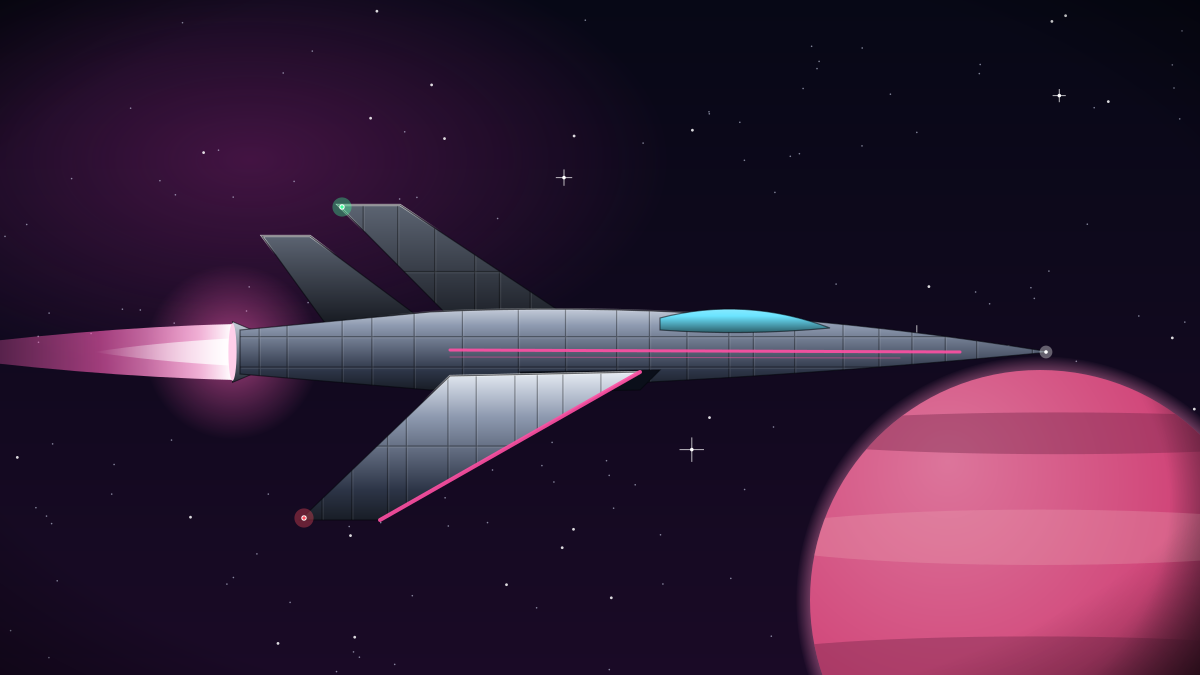
Three of our current ships are designed to be flown by a single pilot: the Aurora Mk II courier, the Corvid Stealth Scout, and the Wren Microlifter. The Aurora is the extreme case. It reaches 1,450 km/s, crosses from L5 to Mars orbit in days rather than weeks, and has exactly one person aboard who is responsible for everything. Designing that flight deck taught us more about interface design than any other project in my career.
Our first principle was that the pilot should never have to search. On the Aurora Mk II, every piece of information has a fixed home. Trajectory and closure rates sit on the central display; drive and reactor state sit to the left; communications and cargo, all 4 tonnes of it, sit to the right. Nothing moves, nothing pops up uninvited. We tested adaptive layouts that rearranged themselves by flight phase, and pilots hated them.
The second principle was graded alerts. A solo pilot cannot be startled every time a valve reports a minor deviation. We use four levels, from a quiet colour shift to a spoken warning, and the onboard autonomy system decides which level applies based on time-to-consequence. In simulator trials this cut missed critical alerts by 70 percent compared with our older two-pilot decks.
The Corvid added a different challenge. As a low-signature reconnaissance scout, it often flies with most emissions suppressed, including cabin lighting. Its cockpit is designed to work in near-darkness: low-luminance amber displays, tactile switch shapes you can identify by touch, and a haptic seat that pulses to indicate attitude. Pilots flying patrols around Callisto told us the haptic cues were the single most useful feature.
We spent a lot of time on fatigue. A single-seat ship on a 60 AU courier run can mean days of solo flight. Both cockpits recline into sleep positions, and the autonomy co-pilot can hold course while the pilot rests, waking them only for decisions it is not certified to make.
Finally, we brought pilots in early and often. More than 140 working pilots, from cislunar shuttle crews to Belt prospectors, flew our prototypes in the simulator suite here in Oceania. Their notes filled two rooms of whiteboards, and nearly every control on the Aurora's flight deck sits where it does because a pilot moved it there.