Blog post
Mapping Europa's ice shell with the Valkyrie
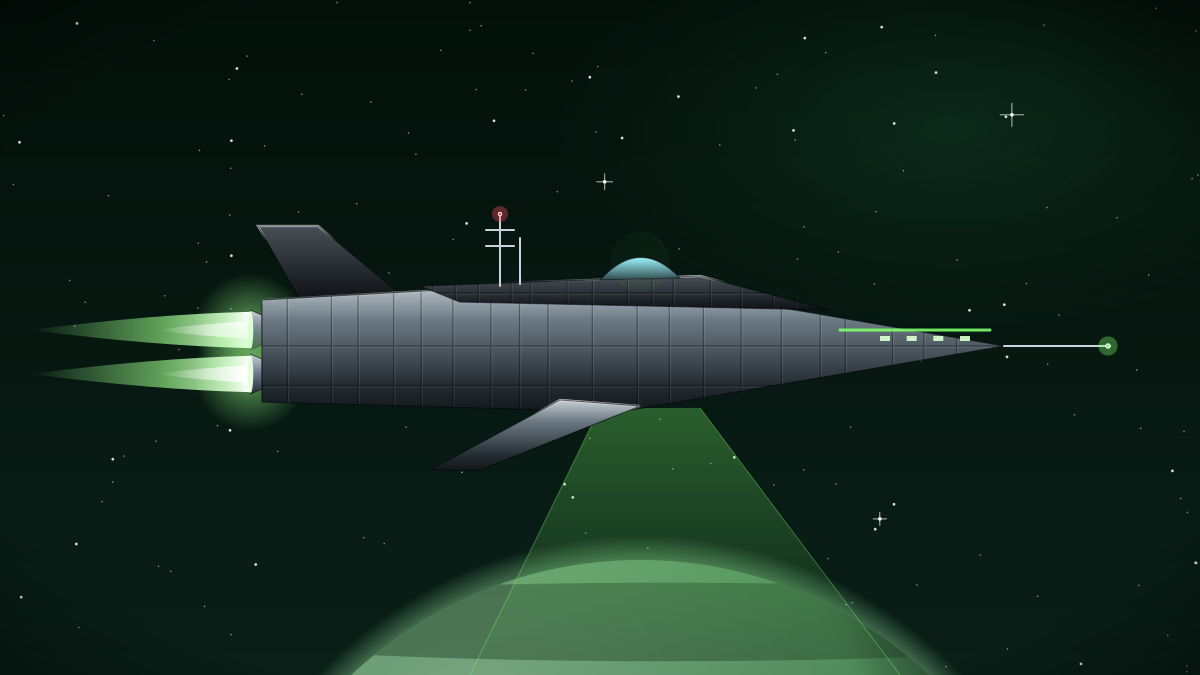
Europa's ocean is the most interesting body of water in the solar system, and it is hidden under an ice shell that varies from a few kilometres to more than twenty. For settlements, drilling ventures and researchers alike, knowing where that shell is thin is the first question. Over seven months, a Valkyrie Survey Corvette answered it in more detail than ever before.
The Valkyrie is a 92-metre corvette, flown by two pilots with four survey specialists aboard. It carries ice-penetrating radar, a gravimeter, a lidar altimeter and a magnetometer boom. Its helium-3 drive is efficient at 1.9 tonnes per 100 AU, which mattered: the mapping campaign needed more than 900 orbital passes, each with small plane changes.
We flew the survey in three phases. First, a polar orbit at 200 kilometres to build a global altimetry baseline. Second, a lower 80-kilometre campaign over the chaos terrains, where the ice is believed to be thinnest. Third, targeted passes at 40 kilometres over candidate drilling sites. The radar resolved shell thickness to within 150 metres along most ground tracks.
The result is a thickness map at 2 kilometre resolution, plus 14 candidate sites where the shell appears to be less than 4 kilometres deep. Three of those are near Conamara Chaos and have already attracted drilling proposals.
| Survey metric | Value |
|---|---|
| Orbital passes | 918 |
| Lowest altitude | 40 km |
| Map resolution | 2 km |
| Raw data volume | 212 TB |
All of it is published under CC-BY-4.0 through the Halcyon open data portal. We release the calibrated radargrams, the gravimetry grids and the processing scripts, so anyone can reproduce our thickness estimates or challenge them. Several university groups already have.
One more detail for the technically curious: the survey crew did their own first-pass processing on board. The Valkyrie's compute rack can reduce raw radar returns to preliminary thickness profiles within an hour of each pass, which let the science team adjust the next day's ground tracks while still in orbit. That adaptive planning added 31 passes over unexpectedly thin regions that a fixed plan would have missed entirely.
At 145 million credits, a Valkyrie is a modest investment for the data it returns. Our next campaign will map the subsurface of Callisto, and I would like to see more operators flying these corvettes with the same open-data commitment.