Partner
Tidewater Salvage & Recovery
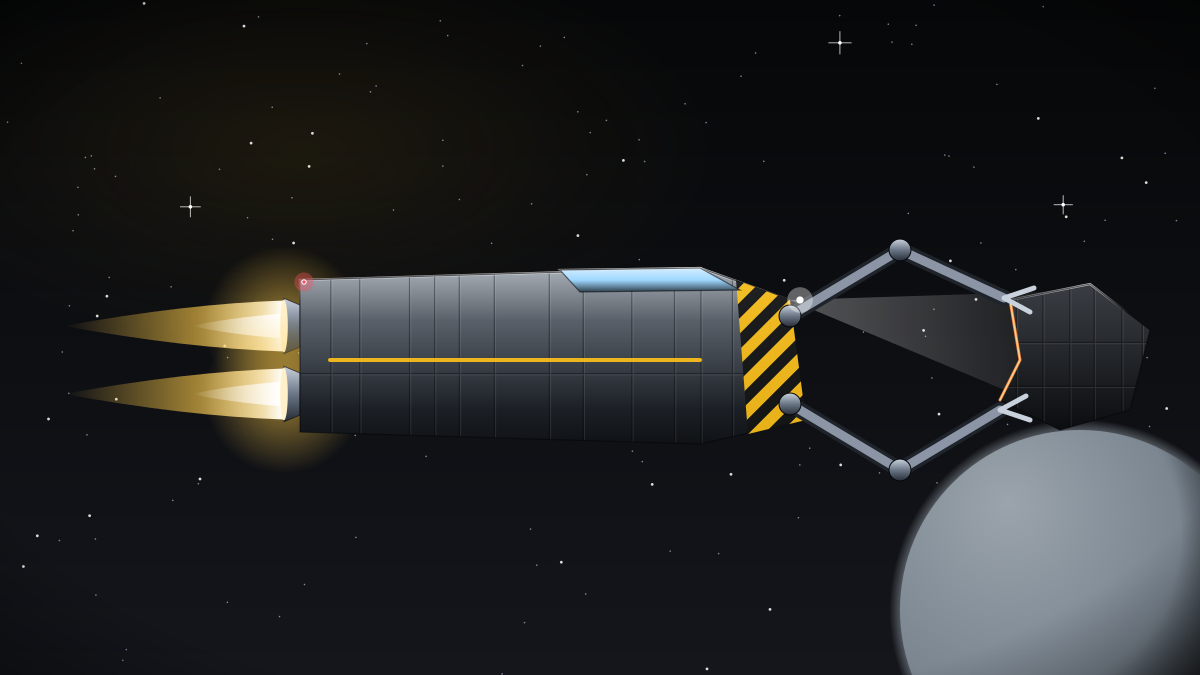
Tidewater Salvage & Recovery started in 2102 as a marine salvage company working the Pacific, and moved into orbit when low Earth orbit became too cluttered to ignore. Today it holds debris-removal contracts for Earth orbit, the cislunar lanes and the approaches to L5 Lagrange Station.
Fifteen Basilisk Salvage Tugs make up its working fleet. A Basilisk is a 118-metre, two-pilot tug with heavy grapples that can tow up to 2,400 tonnes, propelled by argon Hall-effect thrusters that sip about 3.6 tonnes of propellant per 100 AU. At 68 million credits each, Tidewater's founders' great-grandchildren still call it the best bargain in the industry.
Two Polaris Relay Tenders handle delicate jobs such as deorbiting dead satellites without fragmenting them, and four single-pilot Wren Microlifters carry recovered components down to the company's recycling plant in New Zealand.
The company's business model is simple: it is paid once to remove debris and again when the recovered metal is sold. Roughly 70 percent of every tonne Tidewater tows is recycled into new hulls, including, fittingly, parts of new Basilisk tugs. Tidewater's tug crews train for months on low-risk targets before taking on spinning derelicts, and the company has not lost a crew member in more than 40 years of orbital work.
Tidewater's 2182 recovery of the derelict Kalinda station, a 1,900-tonne structure tumbling near L5, required three Basilisks working in tandem for eleven days. Ana Kalani of Halcyon's flight operations team trained the tug crews from our Oceania office.