Partner
Europa Ocean Sciences Foundation
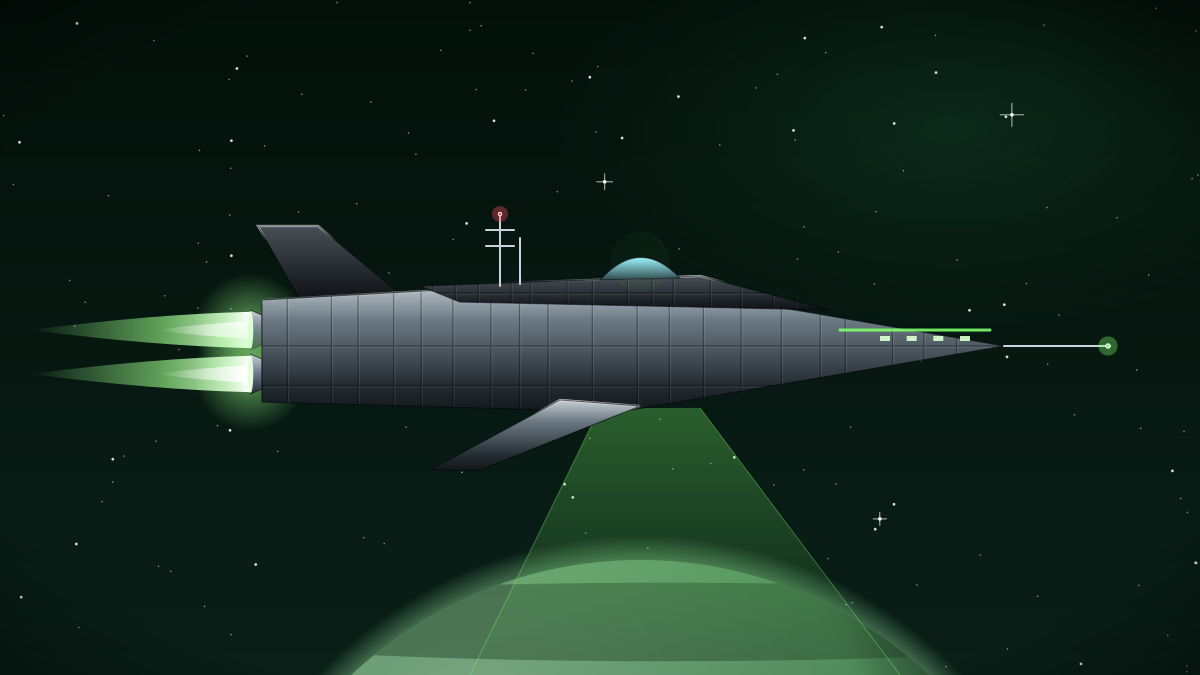
Under 20 kilometres of ice, Europa hides more water than all of Earth's oceans. The Europa Ocean Sciences Foundation, founded in 2138, runs a permanent research base on the moon's surface and drills science probes into its subsurface ocean.
Four Valkyrie Survey Corvettes map the ice shell from orbit. Each two-pilot Valkyrie carries lidar, gravimetry and spectrometry, with a 220 AU range and frugal 1.9 tonnes per 100 AU fuel use. At 145 million credits each, the Foundation calls them the cheapest way to get a laboratory into Jovian orbit.
Two Cascade Dropships land drilling rigs and staff on the ice, 220 tonnes or 60 people at a time. A single Odyssey Deep Explorer supports longer campaigns to Enceladus, and one Tempest Ice Runner, bought second-hand, carries core samples and water back to inner-system laboratories.
The Foundation picked Halcyon ships partly because they share common parts. Valkyrie, Cascade and Odyssey use the same avionics and life-support components, which matters when the nearest spare parts depot is 600 million kilometres away. All of the Foundation's survey data is released under open licences after a twelve-month embargo, and its ice-penetrating radar maps are among the most downloaded datasets in Halcyon's catalogue.
In 2184 the Foundation's probe reached liquid water beneath the Conamara Chaos region for the first time. Hana Park, Halcyon's satellite data scientist, publishes the Foundation's orbital datasets through Halcyon's open data programme.